
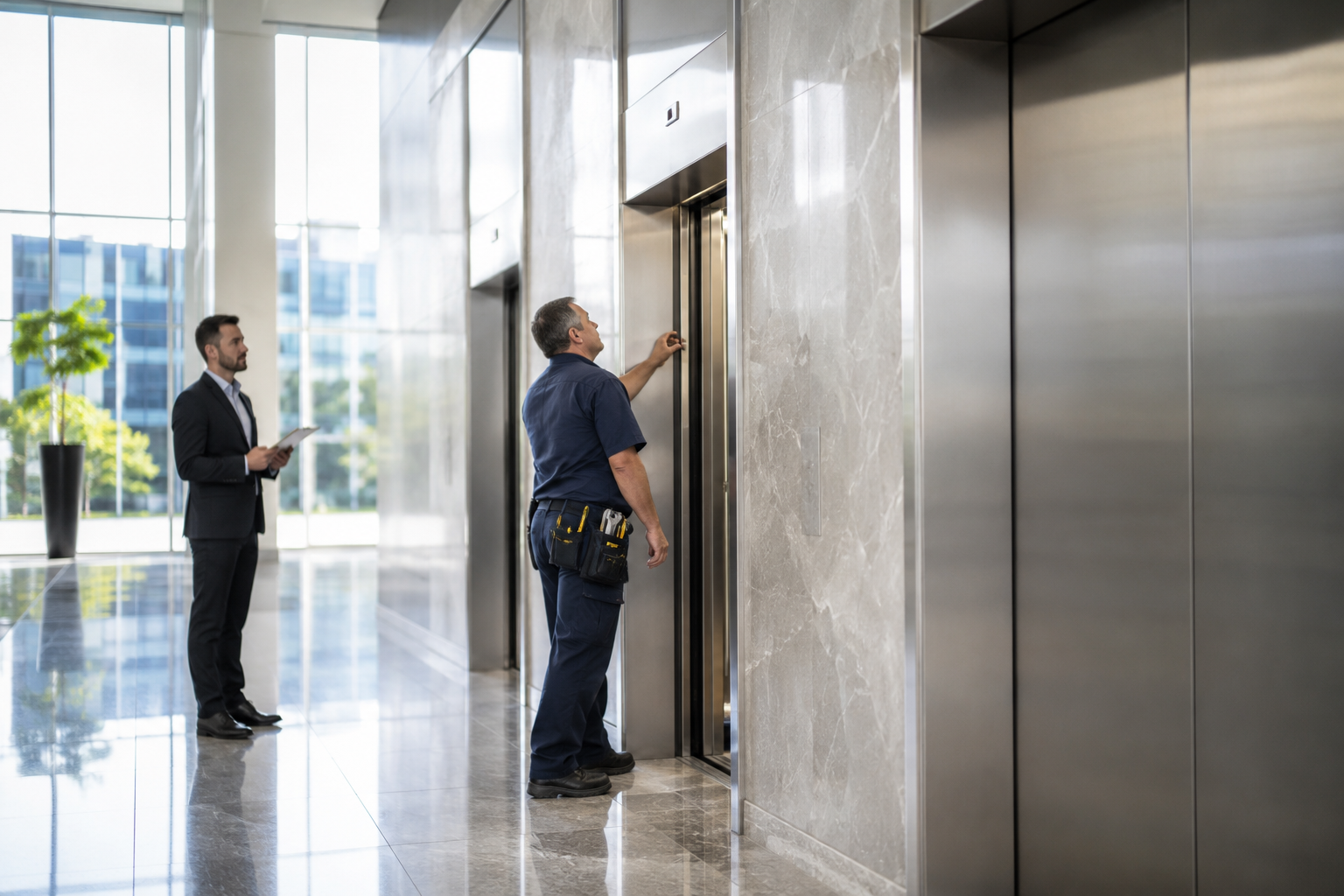
If you’re a building owner or property manager, you’ve probably heard the term “annual elevator inspection.” But what exactly happens during an inspection, and why is it so important? The simplest explanation is this: an annual inspection helps verify that your elevator is operating safely, meets applicable code requirements, and is functioning the way it was designed to. It’s not just another item on a maintenance checklist—it’s an important part of protecting the people who use your building every day.
What Is an Annual Elevator Inspection?
An annual elevator inspection is a required review of your elevator system performed to verify that critical safety features and operational components meet current code requirements. During the inspection, qualified inspectors examine items such as:
- Door operation
- Emergency communication systems
- Safety devices
- Braking systems
- Machine room conditions
- Electrical components
- Hoistway equipment
- General operating performance
The goal is to identify any conditions that could affect safety, reliability, or code compliance.
Is This the Same as Maintenance?
No. Routine maintenance and annual inspections serve two different purposes. Maintenance focuses on keeping the elevator operating properly through regular adjustments, lubrication, cleaning, and replacement of worn components. An annual inspection is an independent evaluation that confirms the system continues to meet safety and code requirements. Think of it this way: Maintenance helps prevent problems. Inspections verify the elevator is safe to operate. Both are essential.
What Happens If Issues Are Found?
Finding deficiencies during an inspection doesn’t necessarily mean your elevator is unsafe. In many cases, inspectors identify relatively minor issues that simply need to be corrected to maintain compliance or improve reliability.
Examples may include:
- Door timing adjustments
- Emergency phone testing
- Signage updates
- Lighting repairs
- Maintenance recommendations
- Minor code corrections
Addressing these items promptly helps avoid larger problems and keeps your building in compliance.
Why Independent Oversight Matters
Many building owners assume that because their elevator maintenance company services the equipment, everything is being monitored automatically. An independent inspection provides another level of oversight by evaluating the system objectively. It gives owners confidence that their elevators are operating safely while helping identify concerns that may not be obvious during day-to-day operation.
For many organizations, these inspections also provide valuable documentation for budgeting, future modernization planning, and long-term asset management.
More Than a Requirement
Annual inspections shouldn’t be viewed as simply another regulatory requirement. They’re an opportunity to better understand your equipment, improve safety, reduce risk, and protect one of the most important systems in your building. A proactive approach today can help prevent unexpected downtime, improve tenant satisfaction, and extend the life of your elevator system.
Whether you manage a commercial office, healthcare facility, residential high-rise, hotel, school, or municipal building, Patriot Elevator Services provides independent inspections and consulting to help keep your building safe, compliant, and operating at its best.

