
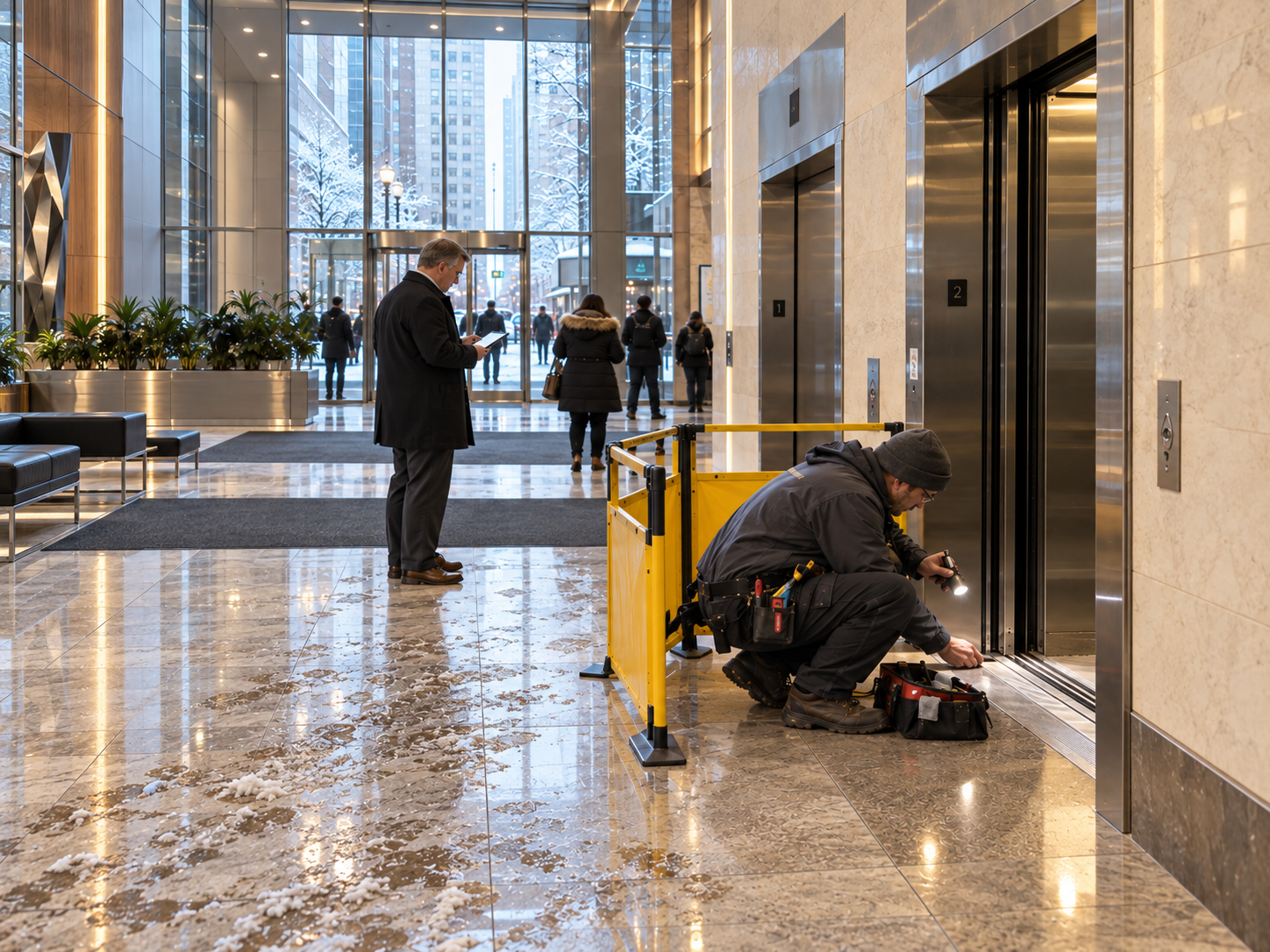
Does Cold Weather Affect Elevators? A Winter Preparation Guide for Building Owners
As temperatures begin to drop, building owners prepare properties for winter by checking heating systems, protecting pipes, inspecting roofs, servicing generators, and planning for snow and ice.
But there is another building system that deserves attention before winter arrives: the elevators.
Does cold weather affect elevators?
It can.
Cold temperatures, changing building conditions, moisture, snow and ice, heating issues, and increased demands on certain components can all contribute to elevator performance problems during the winter months.
That does not mean every elevator will suddenly develop problems when temperatures fall. Modern elevator systems are designed to operate reliably within appropriate environmental conditions.
The bigger concern is what colder weather can reveal.
An elevator already experiencing marginal door operation, aging components, inconsistent maintenance, temperature-control issues, or recurring callbacks may become more troublesome when seasonal conditions change.
For building owners and property managers, fall is an ideal time to review elevator performance before winter exposes an issue at the worst possible time.
Does Cold Weather Affect Elevators?
Cold weather can affect elevator performance when equipment spaces, entrances, components, or related building systems are exposed to temperatures or environmental conditions outside their intended operating range.
The impact depends on the elevator type, building design, equipment condition, location, maintenance history, and severity of the weather.
Potential winter-related concerns can involve:
-
Door operation
-
Lubricants and moving components
-
Temperature-sensitive electronics
-
Hydraulic equipment
-
Moisture and condensation
-
Snow, ice, salt, and debris near entrances
-
Heating or ventilation problems in equipment spaces
-
Emergency power reliability
-
Aging components already nearing the end of their useful life
The important distinction is that winter does not automatically “cause” every elevator problem.
Sometimes colder weather simply exposes a weakness that was already developing.
Why Should Building Owners Prepare Elevators for Winter?
An elevator problem is inconvenient at any time.
During severe winter weather, it can become much more difficult to manage.
Technicians may face difficult travel conditions. Replacement parts can take time to obtain. Building traffic patterns may change. Snow and ice can increase activity around entrances. Power disruptions can create additional operational challenges.
For residential buildings, hospitals, senior living facilities, hotels, government buildings, and other properties where people depend heavily on elevators, an outage can quickly become more than an inconvenience.
The goal of winter elevator maintenance is not to predict every possible failure.
It is to identify known problems, unresolved maintenance issues, and vulnerable equipment before seasonal conditions add another layer of stress.
1. Cold Temperatures Can Affect Elevator Equipment
Elevator equipment is designed to operate under specified environmental conditions.
Problems can develop when equipment areas become excessively cold or experience significant temperature fluctuations.
Different elevator technologies can respond differently to environmental conditions.
Hydraulic Elevators
Hydraulic elevator systems use hydraulic fluid as part of their operation.
Temperature can affect fluid characteristics, which is one reason appropriate environmental conditions and equipment maintenance matter.
If a hydraulic elevator begins behaving differently as temperatures fall, the issue should be evaluated rather than dismissed as “just the weather.”
Traction Elevators
Traction elevators use different equipment and do not rely on hydraulic fluid for movement in the same way.
However, they still contain mechanical and electronic components that need appropriate operating conditions.
Controllers, drives, motors, door equipment, sensors, and related systems all depend on proper installation, maintenance, and environment.
2. Elevator Doors Deserve Extra Attention Before Winter
Ask almost any experienced building manager about recurring elevator complaints and doors will likely enter the conversation.
Elevator doors perform an enormous amount of work.
In a high-traffic property, they can open and close hundreds or even thousands of times during normal operation.
Winter can introduce additional challenges around entrances, particularly in areas exposed to exterior conditions.
Snow, water, road salt, dirt, and debris can be tracked into a building and accumulate near elevator entrances.
That does not mean a little snow on someone’s shoes will cause an elevator failure. It does mean building housekeeping and entrance maintenance become especially important during poor weather.
Watch for Door Warning Signs
Property managers should pay attention to:
-
Doors reopening repeatedly
-
Slow door movement
-
Doors hesitating before closing
-
Unusual noises
-
Frequent door-related service calls
-
Damage around entrances
-
Debris collecting near sills or tracks
Recurring door issues should be documented and investigated.
A problem that repeatedly receives temporary attention without being permanently resolved can lead to unnecessary downtime and expense.
3. Moisture, Snow and Salt Can Create Problems Around Elevator Entrances
Winter weather does not stay outside.
People carry it into the building.
Wet shoes, melting snow, umbrellas, carts, delivery equipment, and deicing products can introduce moisture and debris into lobby areas.
For elevator entrances near exterior doors, garages, parking structures, transit areas, or loading zones, the exposure may be even greater.
Building staff should keep elevator landing areas clean and dry and address unusual water infiltration promptly.
Water appearing where it does not belong should never simply become “normal” because it happens every winter.
The source should be identified.
4. Temperature Control in Elevator Equipment Areas Matters
Building owners sometimes focus on the elevator cab while overlooking the spaces containing critical elevator equipment.
Those areas can be just as important.
Depending on the elevator design, equipment may be located in machine rooms, machinery spaces, control rooms, hoistways, or other designated areas.
Environmental conditions in these locations should remain appropriate for the installed equipment and applicable requirements.
A seasonal building walkthrough should therefore include questions such as:
-
Is heating or ventilation functioning properly?
-
Have there been unusual temperature fluctuations?
-
Is there evidence of moisture or water intrusion?
-
Have building modifications changed airflow?
-
Are doors and access points being kept appropriately secured?
-
Has equipment been stored in spaces where it should not be?
An elevator technician may understand the elevator equipment, while building engineering staff understand the HVAC and building systems.
Winter preparation often requires both perspectives.
5. Power Problems Can Become Elevator Problems
Winter storms can bring high winds, ice, downed utility lines, flooding, and power interruptions.
What happens to your elevators if normal building power is lost?
The answer depends on the building.
Some properties have emergency or standby power arrangements that support certain elevator functions. Others may have different procedures and capabilities.
Building management should understand its actual system before an outage occurs.
Questions worth asking include:
-
Which elevators are connected to emergency or standby power?
-
How is elevator operation prioritized?
-
Has the system been properly tested?
-
How does the generator interface with the elevators?
-
Are there unresolved emergency power issues?
-
Who coordinates testing between the elevator and electrical teams?
Emergency power planning should not begin when the lights go out.
6. Winter Can Expose Existing Maintenance Problems
This may be the most important point for building owners.
Seasonal changes often get blamed for equipment failures when the underlying issue has existed for months.
Imagine an elevator that already has:
-
Intermittent door problems
-
Increasing callbacks
-
Aging equipment
-
Deferred repairs
-
Poor maintenance documentation
-
Obsolete components
-
Inconsistent leveling
-
Unusual noises or vibration
Then winter arrives and performance becomes worse.
The weather may contribute to the symptoms, but it may not be the underlying cause.
That distinction matters because the solution should address the actual problem—not merely the season.
7. Aging Elevator Systems May Need More Than Seasonal Maintenance
Preventive maintenance is important, but maintenance cannot make every component last forever.
As elevator systems age, building owners may face increasing repair costs, component obsolescence, longer downtime, and difficulty sourcing replacement parts.
If an elevator struggles every winter, the question should eventually become:
Are we dealing with a seasonal problem, or is winter exposing an aging elevator system that needs a larger investment?
That is where modernization planning becomes important.
A good modernization strategy allows owners to evaluate equipment condition and budget for future improvements before repeated failures force an emergency decision.
What Should Be Included in a Fall Elevator Review?
Building owners do not need to dismantle equipment or perform technical elevator work.
The objective is to make sure the right professionals are addressing the right questions.
A pre-winter elevator review can include consideration of:
Maintenance History
Review recent service calls and callbacks.
Are the same problems appearing repeatedly?
Outstanding Repairs
Determine whether recommended or required repairs remain unresolved.
Door Performance
Pay particular attention to recurring door complaints or entrance conditions.
Equipment Environment
Confirm that equipment spaces are maintained within appropriate environmental conditions.
Water Intrusion
Investigate leaks, moisture, or recurring water problems around elevator equipment and entrances.
Emergency Communications
Make sure known communication problems have been addressed.
Emergency Power
Understand how the elevators are expected to respond during loss of normal power.
Inspection and Testing Status
Verify that required inspection, testing, and corrective work are being properly managed.
Obsolescence
Identify components that are becoming difficult to repair or replace.
Capital Planning
Determine whether recurring maintenance problems indicate the need for future modernization.
What Can Property Managers Do to Reduce Winter Elevator Problems?
Good elevator management is often less complicated than people assume.
The biggest improvement is usually better oversight.
Keep accurate records.
Track repeat service calls.
Ask why the same component keeps failing.
Make sure recommended repairs are completed.
Maintain clean and dry elevator entrances.
Address water infiltration.
Pay attention to equipment-room conditions.
Understand your emergency power strategy.
And make sure your maintenance contractor is actually providing the level of service required under your agreement.
Most importantly, do not wait until the elevator is repeatedly shutting down to start asking questions.
Should Elevators Receive Preventive Maintenance Before Winter?
Elevators should already be receiving maintenance according to the building’s service agreement and applicable requirements.
The goal is not necessarily to create an entirely separate “winter service” program.
Instead, fall provides a logical opportunity for building owners to review whether their existing maintenance program is actually working.
Ask your elevator service provider:
-
Are there unresolved deficiencies?
-
Have we had repeat callbacks?
-
Are any components showing unusual wear?
-
Are there parts-obsolescence concerns?
-
Have door problems increased?
-
Is there anything we should address before winter?
-
Are we approaching any required tests or inspections?
The answers can tell you a great deal about the condition of your elevator program.
Why Maintenance Contracts Should Be Reviewed Before Problems Escalate
A maintenance contract can be one of the largest ongoing elevator expenses for a building.
Yet many owners have never carefully reviewed what their agreement actually includes.
When a winter repair occurs, the contractor may submit an additional proposal.
Before approving it, owners should understand whether the work is actually outside the maintenance agreement.
Ask:
Is this repair excluded from our contract, or are we being charged separately for something that should already be covered?
The answer can make a significant financial difference.
Independent elevator consultants can help owners review service agreements, repair proposals, maintenance performance, and recurring callbacks to determine whether the building is receiving the service it is paying for.
What Should You Do If Your Elevator Keeps Breaking Down in Cold Weather?
Do not simply accept repeated winter shutdowns as unavoidable.
Document the pattern.
Look at when the problems occur, what components are involved, what repairs have been performed, and whether the same issue returns.
Then evaluate the problem in context.
A recurring seasonal issue could involve equipment condition, environmental conditions, maintenance practices, building systems, or a combination of factors.
Finding the root cause is more valuable than repeatedly treating the symptom.
How Independent Elevator Consulting Can Help Before Winter
Your elevator maintenance contractor is responsible for maintaining and servicing the equipment according to your agreement.
An independent elevator consultant has a different responsibility:
representing the building owner’s interests.
Patriot Elevator Services can help owners evaluate:
-
Elevator maintenance performance
-
Recurring service calls
-
Repair recommendations
-
Maintenance agreements
-
System condition
-
Inspection and testing concerns
-
Equipment obsolescence
-
Modernization needs
-
Capital planning
-
Long-term elevator strategy
For owners managing multiple properties, independent oversight can also help identify trends across a portfolio.
One problematic elevator may be an isolated issue.
Five properties experiencing similar service problems may indicate something much larger.
Which Buildings Should Pay Particular Attention to Winter Elevator Reliability?
Winter elevator preparation is valuable for any building, but reliability becomes especially important for properties such as:
-
High-rise residential buildings
-
Commercial office towers
-
Hospitals and healthcare facilities
-
Senior living communities
-
Hotels
-
Government buildings
-
Universities
-
Parking structures
-
Mixed-use developments
-
Buildings with elevators near exterior entrances
For these properties, an elevator outage can affect accessibility, operations, tenant satisfaction, staffing, deliveries, and overall building performance.
When Should You Start Preparing Elevators for Winter?
Do not wait for the first major freeze or winter storm.
Fall is an ideal time to review system performance because it gives building owners an opportunity to address known issues before harsher conditions arrive.
October and November can be used to review maintenance history, identify outstanding repairs, confirm equipment-space conditions, evaluate emergency power preparedness, and investigate recurring problems.
If a larger repair or modernization issue is discovered, early identification also provides more time for budgeting and planning.
Winter Elevator Maintenance Is Really About Year-Round Reliability
There is an important takeaway here.
A well-managed elevator should not need to be rescued from neglect every October.
Winter preparation works best when it is part of a larger elevator asset-management strategy that includes:
-
Consistent preventive maintenance
-
Performance monitoring
-
Timely repairs
-
Inspection and testing compliance
-
Maintenance contract oversight
-
Capital planning
-
Modernization planning
The objective is not simply to get through winter.
It is to operate a safer, more reliable, and more cost-effective elevator system throughout the year.
How Patriot Elevator Services Helps Building Owners Prepare
Elevator systems represent a significant investment, and decisions about maintenance, repairs, modernization, and compliance can have long-term financial consequences.
Patriot Elevator Services provides independent elevator consulting for building owners, property managers, developers, institutions, and commercial real estate organizations.
We help clients understand the condition of their equipment, evaluate maintenance performance, identify developing concerns, review contractor recommendations, and plan intelligently for future elevator needs.
As colder weather approaches, this is an ideal time to ask a simple question:
Are your elevators ready for winter?
If the answer is unclear, now is the time to find out.
Conclusion: Prepare Your Elevators Before Winter Arrives
So, does cold weather affect elevators?
It can, particularly when equipment is exposed to inappropriate environmental conditions or when an existing maintenance, component, moisture, door, or building-system issue is already present.
The best defense is proactive management.
Review maintenance history. Address recurring callbacks. Keep elevator entrances clean and dry. Check for water infiltration. Maintain appropriate equipment environments. Understand emergency power operation. And do not ignore aging equipment that repeatedly causes problems.
A little preparation in the fall can help reduce unwanted surprises when winter weather arrives.
If you own or manage a commercial, residential, institutional, hospitality, or high-rise property, Patriot Elevator Services can provide an independent evaluation of your elevator maintenance, performance, repair needs, and long-term capital strategy. Contact our team to make sure your vertical transportation systems are prepared for the months ahead.
Frequently Asked Questions About Elevators and Cold Weather
1. Does cold weather affect elevators?
Cold weather can affect elevator performance when equipment or related building systems are exposed to unsuitable temperatures or environmental conditions. The impact varies based on elevator type, building design, equipment condition, and maintenance history.
2. Why does my elevator have more problems during winter?
Recurring winter elevator problems can be related to environmental conditions, doors, moisture, equipment temperature, aging components, or existing maintenance issues. Repeated seasonal problems should be investigated rather than automatically blamed on cold weather.
3. Do hydraulic elevators have problems in cold weather?
Temperature can affect the characteristics of hydraulic fluid and the operation of hydraulic elevator equipment. Proper environmental conditions and maintenance are important. Changes in elevator performance during colder weather should be evaluated by qualified professionals.
4. How do I prepare an elevator for winter?
Review maintenance history, resolve outstanding repairs, monitor door performance, address moisture or water intrusion, maintain appropriate conditions around elevator equipment, verify emergency preparedness, and investigate recurring problems before severe weather arrives.
5. Should elevators receive special maintenance before winter?
Elevators should receive appropriate maintenance throughout the year. Rather than relying solely on a special seasonal service, building owners can use fall as an opportunity to review maintenance performance, unresolved deficiencies, recurring callbacks, equipment condition, and winter preparedness.

