
What Happens During an Elevator Safety Test? A Building Owner’s Guide to Testing and Compliance
If you own or manage a building with elevators, you probably know that inspections and testing are part of maintaining the equipment. What may be less clear is what actually happens during an elevator safety test. Building owners often have questions about what technicians test, who participates, how long the process takes, and what happens when a test identifies a problem.
Does the elevator need to come out of service? What equipment will technicians test? Is an elevator safety test the same as an inspection? Most importantly, what should an owner do when testing reveals a deficiency?
Elevator safety testing is more than another date on a compliance calendar. It can provide valuable information about equipment condition, safety functions, maintenance performance, and reliability. The results may also help owners identify future repair or modernization needs.
Understanding the process helps building owners ask better questions and prepare for testing with less disruption. It also makes it easier to evaluate the results and decide what should happen next.
What Is an Elevator Safety Test?
An elevator safety test evaluates specific elevator components, operating functions, and safety devices to confirm that they perform as required. During testing, qualified professionals may activate or evaluate functions that passengers rarely experience during normal operation.
The exact procedures depend on several factors. These include the elevator type, equipment configuration, applicable codes, local requirements, and the authority having jurisdiction. A traction elevator in a high-rise office building, for example, has different equipment than a hydraulic elevator in a smaller commercial property.
As a result, one testing checklist does not apply to every elevator. The required testing should match the equipment and the requirements that apply to that installation.
Why Do Elevators Need Safety Testing?
An elevator can appear to operate normally while still having a problem with a component or safety function. A routine ride can show whether the elevator starts, travels, stops, and opens its doors. It cannot confirm that every safety-related function will perform correctly when needed.
Formal elevator safety testing examines specific equipment and functions under controlled conditions. Depending on the system and required test, technicians may evaluate safety devices, controls, emergency functions, and other components.
Testing can also uncover problems before they contribute to a larger operational issue. For building owners, this makes testing valuable for both compliance and long-term elevator management.
What Happens During an Elevator Safety Test?
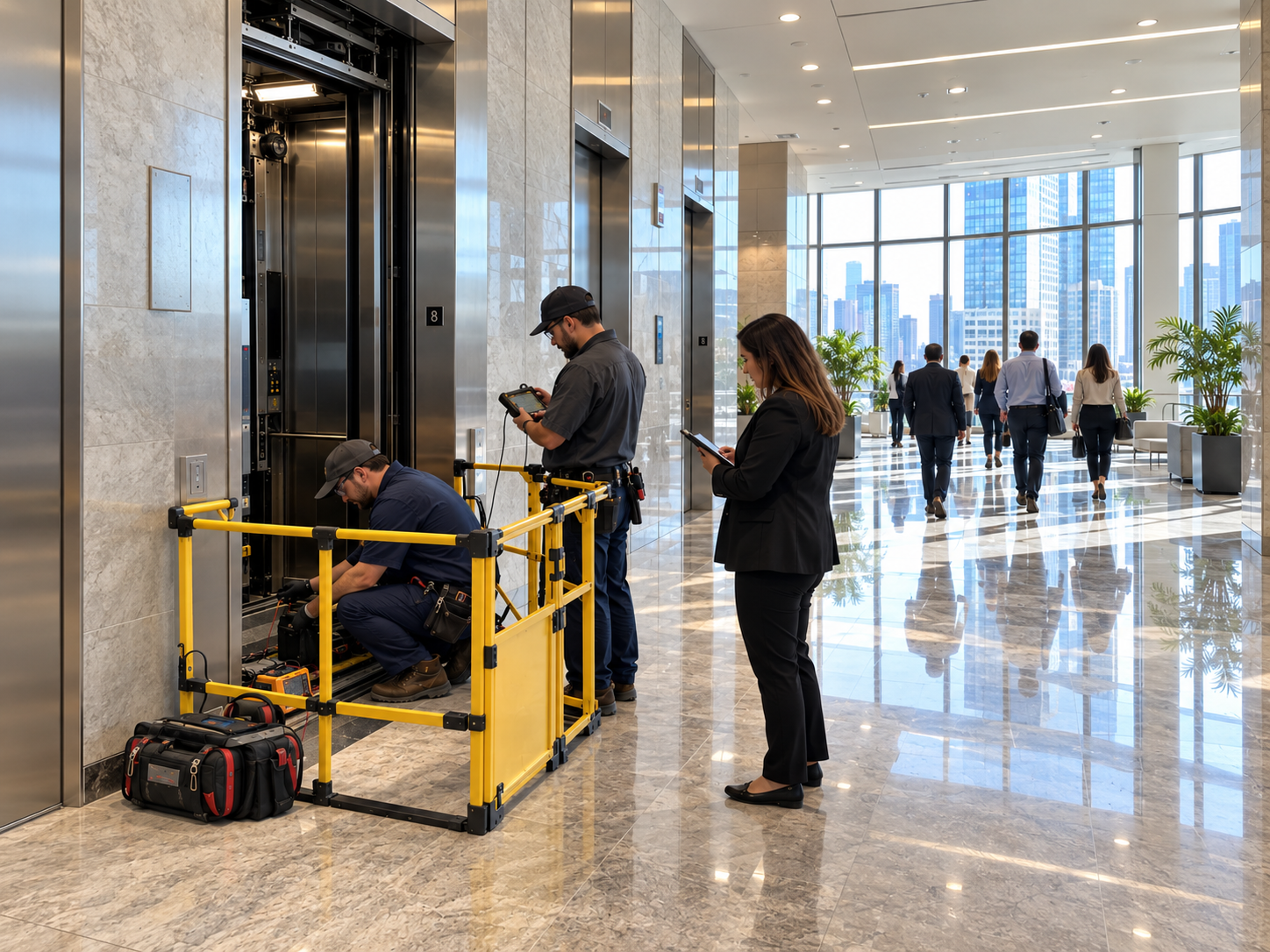
The exact process varies based on the elevator and the required test. Qualified personnel may temporarily remove the elevator from passenger service before beginning the work. This gives them controlled access to the equipment and allows them to perform the necessary procedures.
Building management should understand how testing will affect daily operations. Managers should know which elevator will be unavailable, how long the work may take, and whether other elevators will remain in service. High-rise offices, hospitals, hotels, residential towers, senior living communities, and public facilities may require additional planning.
During the test, qualified professionals evaluate the equipment and functions that apply to the specific procedure. The work may involve mechanical, electrical, operational, emergency, or safety-related components.
An elevator safety test involves more than visually examining the equipment. Technicians may need to operate, activate, measure, or evaluate certain functions to confirm proper performance.
What Elevator Components Are Checked During Safety Testing?
The components involved in an elevator safety test depend on the equipment and applicable requirements. Elevator systems contain many mechanical, electrical, and electronic components. Different tests focus on different parts of the system.
Door equipment often receives close attention because elevator doors operate constantly throughout the day. In a busy building, they may complete hundreds or even thousands of cycles. Door problems can contribute to passenger complaints, service calls, shutdowns, and inspection deficiencies.
Depending on the test, technicians may also evaluate safety devices, operating controls, emergency functions, communication equipment, and other components. The scope should reflect the elevator and the requirements that apply to the property.
Are Elevator Emergency Systems Tested?
Required testing or coordinated system evaluations may include certain emergency-related elevator functions. The exact scope depends on the building, elevator system, and applicable requirements.
These functions can include elevator recall, Firefighters’ Emergency Operation, emergency communications, emergency lighting, fire alarm interfaces, and emergency or standby power. Building occupants may never see many of these systems operate during normal use.
That makes proper testing especially important. A building may have an elevator that provides reliable everyday service while an emergency-related function needs attention. Controlled testing can identify the problem before an actual emergency occurs.
Emergency system testing may also require coordination among several professionals. Elevator contractors, fire alarm companies, electrical personnel, building engineers, inspectors, and other parties may need to work together when building systems interact.
Are Elevator Doors Tested for Safety?
Elevator doors play a critical role in safe and reliable elevator operation. Inspection and testing activities may include applicable door equipment and safety functions.
Doors also rank among the most heavily used parts of an elevator. Building managers should pay attention to recurring problems such as doors that reopen repeatedly, move slowly, hesitate, make unusual noises, or fail to close consistently.
A single adjustment may correct an isolated issue. Repeated door problems, however, can point to a larger maintenance or equipment concern. Testing gives qualified professionals another opportunity to identify deficiencies and determine whether the equipment needs corrective work.
Is Elevator Performance Evaluated During Testing?
Safety testing has specific technical objectives, but the process can also reveal useful information about elevator performance. Qualified professionals may notice issues involving starting, stopping, leveling, door operation, control response, noise, vibration, or other equipment behavior.
These observations become more useful when owners compare them with the elevator’s maintenance history. One unusual event may have little significance by itself. Recurring callbacks, poor ride quality, repeated deficiencies, aging equipment, and increasing downtime create a much clearer pattern.
Building owners should therefore avoid viewing each test, inspection, service call, and repair as a separate event. Together, these records tell the larger story of an elevator’s condition and reliability.
What Is the Difference Between an Elevator Inspection and an Elevator Test?
Building owners often use the terms elevator inspection and elevator test interchangeably. However, they do not always describe the same process.
An elevator inspection generally examines equipment and conditions for compliance with applicable requirements. Elevator testing goes further by operating, activating, measuring, or evaluating specific components and functions.
The two processes often work together as part of a larger compliance program. The distinction matters because a visual examination alone cannot confirm how every required function will perform. Certain equipment and safety functions require active testing.
Is Elevator Safety Testing the Same as Routine Maintenance?
No. Routine elevator maintenance and elevator safety testing serve different purposes. Both, however, contribute to safe and reliable elevator operation.
Routine maintenance focuses on keeping the equipment operating properly over time. Depending on the service agreement and equipment, maintenance may include examination, cleaning, lubrication, adjustment, troubleshooting, repairs, and replacement of covered components.
Safety testing has a different purpose. It evaluates specific equipment and functions to determine whether they perform according to applicable requirements. A maintenance contract does not eliminate required testing, and a successful test does not replace a comprehensive maintenance program.
Building owners need both effective maintenance and appropriate testing.
Who Performs Elevator Safety Testing?
The people involved in elevator safety testing vary by test type, equipment, jurisdiction, and local requirements. Qualified elevator personnel, maintenance contractors, inspectors, building engineers, and independent elevator consultants may each have a role. Fire alarm or electrical professionals may also participate when the elevator interfaces with other building systems.
Building owners can sometimes assume that the elevator company handles every part of the process. In reality, several parties may share responsibility. Poor coordination can delay testing, create documentation problems, or leave deficiencies unresolved.
Property managers should know who will perform the work and who will verify the required testing. They should also understand who receives the results and who must coordinate corrective action.
Does an Elevator Have to Be Shut Down for Safety Testing?
Certain tests require temporary removal of the elevator from normal passenger service. The duration depends on the test, equipment condition, elevator type, and number of elevators in the building. Unexpected deficiencies can also extend the process.
Buildings with several elevators can often coordinate testing while other units remain available. Properties with only one or two elevators may face greater disruption. Taking one elevator out of service can significantly reduce available capacity.
Hospitals, hotels, residential buildings, senior communities, government facilities, and other high-traffic properties should plan accordingly. Advance scheduling and clear communication can help reduce inconvenience for occupants and staff.
How Long Does Elevator Safety Testing Take?
There is no universal timeframe for an elevator safety test. The duration depends on the type of test, elevator configuration, equipment condition, site access, and coordination between the professionals involved.
Instead of relying on a generic time estimate, building owners should focus on how the testing will affect the property. Ask which elevator will come out of service and when the work will begin. Determine whether contractors need access to other building systems and what happens if testing uncovers a problem.
These questions help property managers prepare for the operational impact of the work.
What Happens If an Elevator Fails a Safety Test?
When testing identifies a deficiency, the next step depends on the nature and severity of the problem. The applicable requirements also influence what happens next. Corrective action may include an adjustment, repair, component replacement, additional testing, or reinspection.
Some conditions may affect whether the elevator can remain in service. The applicable authority and qualified professionals should determine the appropriate response based on the specific circumstances.
A failed test does not automatically mean the elevator needs modernization. Some deficiencies have straightforward solutions. Others may point to a larger concern, especially when the elevator also has recurring failures, obsolete equipment, rising repair costs, or difficult-to-source parts.
Building owners should understand what failed and why it failed. They should also confirm that the proposed corrective action addresses the actual problem.
What Should Building Owners Ask When a Deficiency Is Found?
When testing identifies a problem, building owners should ask several questions before approving significant work. Start by asking what failed, why it failed, and what the contractor recommends to correct it. Owners should also determine whether the same issue has occurred before.
Next, review the maintenance agreement. The contract may cover some repairs, while other work may represent a legitimate additional expense. Understanding that distinction can prevent unnecessary costs and disagreements.
Equipment age also matters. A repair that makes sense for a newer elevator may deserve more scrutiny on an older system with frequent callbacks and obsolete components. The proposed repair should make sense within the larger lifecycle of the equipment.
Why Maintenance Records Matter During Elevator Testing
Maintenance records can turn an isolated test result into useful management information. A single deficiency may not indicate a larger problem. When the same component repeatedly appears in callback reports, repair proposals, inspection findings, and test results, however, a pattern begins to emerge.
Building owners should retain maintenance reports, callback records, repair invoices, inspection findings, test results, and contractor recommendations. Organizing those records by individual elevator makes long-term performance easier to evaluate.
Good records become even more valuable for organizations that manage several properties. Owners can compare contractor performance, identify unreliable equipment, anticipate capital needs, and recognize recurring problems across a portfolio.
Can Elevator Safety Testing Identify Modernization Needs?
Safety testing does not replace a modernization assessment. Likewise, one failed test does not mean an elevator needs modernization. Test results can, however, contribute useful information to a broader evaluation of the equipment.
Consider an older elevator that already experiences frequent callbacks and rising maintenance costs. Replacement parts may also be difficult to find. If testing begins to reveal additional deficiencies, ownership may need to examine the system more closely.
A better modernization decision considers the entire picture. Equipment age, maintenance history, reliability, repair expenses, parts availability, test results, and future building needs all matter. Reviewing these factors together helps owners plan before repeated failures force an emergency capital decision.
Why Elevator Testing Matters During Property Due Diligence
Elevator testing and inspection records can provide valuable information during a property purchase, sale, refinancing, or capital review. A building may look excellent during a general walkthrough while its elevators approach significant repair or modernization expenses.
An elevator due diligence review can examine equipment age, maintenance history, outstanding deficiencies, testing records, reliability, and obsolescence concerns. It can also identify potential modernization needs.
This information gives investors and property owners a clearer picture of potential capital exposure. Discovering a major elevator expense before completing a transaction gives buyers time to evaluate and plan for it.
How Can Building Owners Prepare for Elevator Safety Testing?
Good preparation starts with understanding the scope of the scheduled testing. Building management should confirm the date, determine which elevators may become unavailable, and coordinate notifications when necessary. Managers should also make sure the appropriate contractors and building personnel will be available.
Reviewing previous inspection reports can provide useful context before the test. Recent callbacks, unresolved deficiencies, and outstanding repair recommendations may also deserve attention.
After testing, property managers should collect and retain the appropriate documentation. If the test reveals deficiencies, establish what corrective work needs to occur and who will handle it. Confirm the schedule and determine whether the elevator will require additional testing or reinspection.
Effective elevator management requires follow-through. Finding a deficiency has little value if no one tracks the corrective action to completion.
What Elevator Records Should Property Managers Keep?
Elevator documentation becomes increasingly important as equipment ages. Good records help owners evaluate contractor performance, prepare budgets, plan modernization projects, and understand recurring problems.
Useful documentation may include maintenance reports, callback history, inspection records, test results, repair proposals, invoices, violation notices, equipment information, and modernization records. The specific documents will depend on the property and local requirements.
Consistent recordkeeping also makes future decision-making easier. Instead of relying on memory or scattered invoices, owners can review the history of the equipment and identify meaningful trends.
Which Properties Need Careful Elevator Testing Oversight?
Every property should manage elevator testing and compliance appropriately. However, certain buildings face greater operational consequences when elevators experience problems.
High-rise offices, hospitals, healthcare facilities, hotels, residential towers, senior living communities, universities, government buildings, and mixed-use developments often depend heavily on reliable vertical transportation. Elevator problems in these properties can affect accessibility, tenant satisfaction, guest experience, staff movement, deliveries, and daily operations.
The more important elevators are to the property’s daily function, the more valuable proactive testing and maintenance oversight becomes.
Why Independent Elevator Consulting Matters During Safety Testing
Elevator maintenance contractors perform an essential role. They service, maintain, troubleshoot, and repair elevator equipment. An independent elevator consultant serves a different role by representing the building owner’s interests.
That distinction can become particularly important when testing reveals a deficiency or leads to a substantial repair proposal. Owners may need help determining whether the proposed work makes sense. They may also want to know whether the maintenance agreement covers the repair or whether recurring problems indicate a larger issue.
An independent consultant can review test results alongside maintenance records, callback history, repair recommendations, and equipment condition. The consultant can also consider long-term modernization and capital needs.
The goal is not to challenge every contractor recommendation. Independent review gives ownership additional technical information before making significant operational or financial decisions.
How Patriot Elevator Services Supports Building Owners
Elevator systems involve highly specialized equipment, but building owners still make the financial and operational decisions. Those decisions can become difficult when testing deficiencies, inspection findings, maintenance agreements, repair proposals, and modernization recommendations overlap.
Patriot Elevator Services provides independent elevator consulting for building owners, property managers, commercial real estate organizations, developers, institutions, and other professionals responsible for vertical transportation systems. We help clients evaluate maintenance performance, understand inspection and testing issues, review contracts, and assess repair recommendations. We also provide support for modernization planning, due diligence, capital planning, new construction, project oversight, and technical evaluations.
Our role is to help clients understand their elevator systems and make informed decisions. By looking beyond a single test or repair, owners can develop a clearer strategy for safety, compliance, reliability, and long-term capital planning.
Conclusion: Elevator Safety Testing Is More Than a Compliance Requirement
So, what happens during an elevator safety test? Qualified professionals evaluate specific elevator equipment, operating functions, and safety features. They use the required procedures to determine whether those systems perform properly. Depending on the test, the elevator may temporarily come out of passenger service.
For building owners, the value of testing extends beyond a passing result. Testing can uncover deficiencies, recurring maintenance problems, deteriorating components, and operational concerns. The findings can also provide useful information for future repair and capital planning.
Owners should consider test results as one part of the elevator’s overall performance history. Compare the findings with maintenance records, callbacks, repair expenses, equipment age, and reliability trends. This broader view helps owners move away from reactive decisions and toward a more strategic elevator management program.
If you have questions about elevator safety testing, inspection findings, maintenance performance, recurring deficiencies, or the condition of your elevator systems, contact Patriot Elevator Services. Our independent elevator consultants can help you understand the findings, evaluate your options, and develop a practical strategy for your vertical transportation assets.
Frequently Asked Questions About Elevator Safety Testing
What happens during an elevator safety test?
Qualified professionals test specific elevator components, operating functions, and safety devices. The exact procedures depend on the elevator type, equipment, applicable requirements, and the test they need to perform.
Does an elevator have to come out of service during testing?
Some elevator tests require temporary removal from normal passenger service. Building management should coordinate the work in advance to reduce disruption, especially in high-traffic properties or buildings with limited elevator capacity.
What happens if an elevator fails a safety test?
The appropriate response depends on the deficiency and applicable requirements. Corrective action may include an adjustment, repair, component replacement, additional testing, or reinspection. Owners should understand what failed and why before approving major repairs.
Is elevator safety testing the same as an elevator inspection?
Not exactly. An inspection generally examines equipment and conditions for compliance. Testing actively operates, activates, measures, or evaluates specific components and functions. Both may form part of the property’s overall elevator compliance process.
Can an elevator consultant help with safety testing?
Yes. An independent elevator consultant can review test findings, maintenance records, recurring deficiencies, contractor recommendations, repair proposals, and equipment condition. The consultant can also help an owner determine whether larger repair or modernization issues need attention.

