
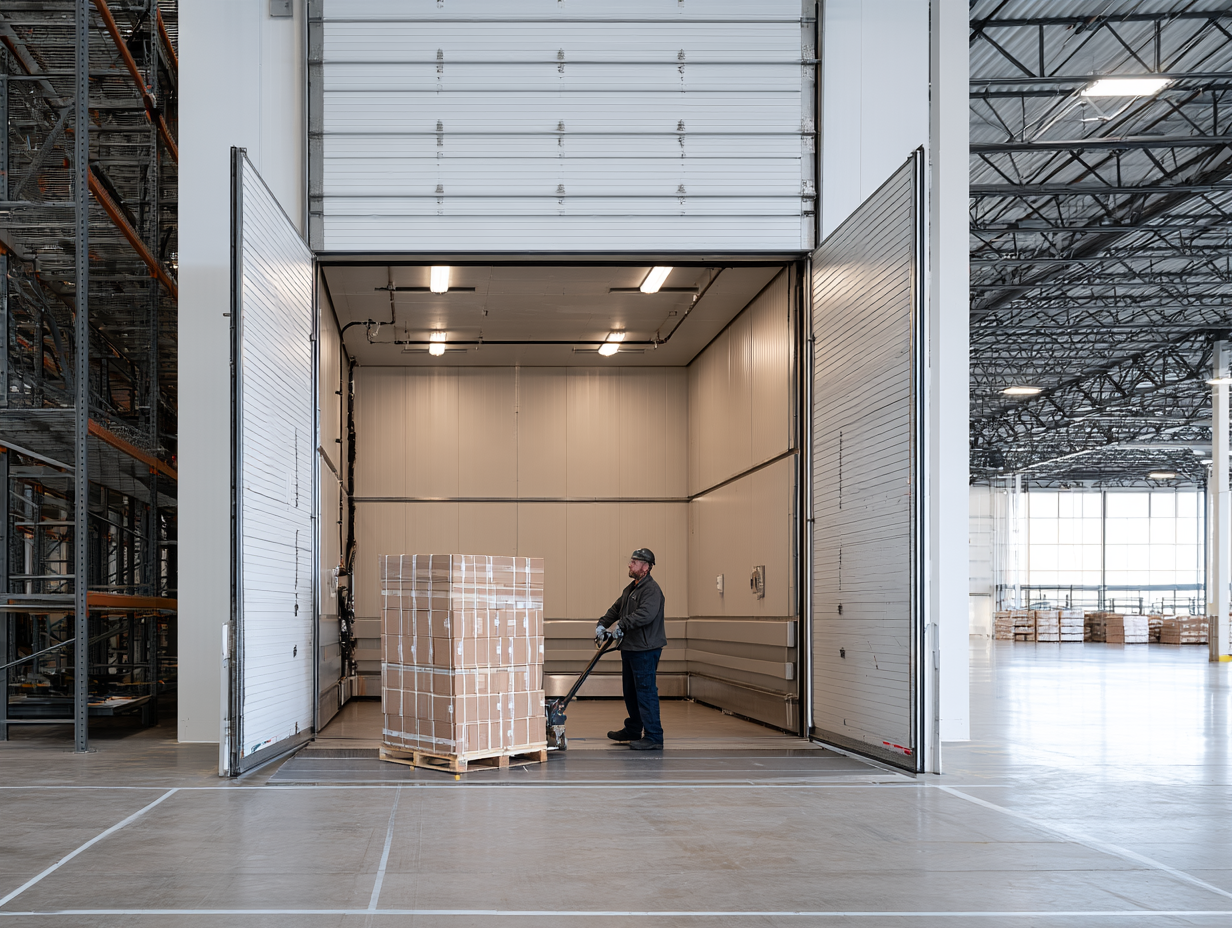
Is Your Freight Elevator Designed to Handle the Demands of Your Facility?
A warehouse can change dramatically without ever adding another square foot of space. New tenants arrive, inventory gets heavier, production increases, and the equipment moving materials throughout the building changes along with it. What once involved employees transporting cartons on hand trucks may now include palletized inventory, powered industrial trucks, and machinery weighing several thousand pounds.
Through all those changes, one piece of equipment often remains exactly as it was when the building opened: the freight elevator.
At first glance, there may be little reason for concern. The elevator continues moving between floors, the doors open and close, and the capacity plate displays a weight limit that seems adequate for the work being performed. But that number doesn’t necessarily tell facility managers everything they need to know about the loads entering the elevator, how those loads are distributed, or whether the equipment was originally designed for today’s operating demands.
Freight elevator capacity involves more than the total weight an elevator can carry. The type of loading, concentration of weight, equipment used to move materials, and forces imposed during loading and unloading all play important roles. For warehouses, manufacturing plants, and other industrial properties, overlooking those differences can lead to equipment damage, unexpected downtime, and substantial repair expenses.
The important question isn’t simply whether the elevator can move a particular load. It’s whether the entire installation is designed to handle that load safely and consistently under the conditions in which the facility operates.
Why Doesn’t a Freight Elevator’s Weight Rating Tell the Whole Story?
When facility managers evaluate freight elevator capacity, they naturally begin with the rated load displayed inside the car. An elevator may have a capacity of 5,000, 8,000, or 10,000 pounds, depending on its design. That rating is important, but it should never serve as the only consideration when determining what equipment or materials can enter the car.
Consider two loads weighing the same amount. One consists of evenly distributed cartons positioned across the elevator floor. The other consists of a compact piece of industrial machinery resting on a few small wheels. Although their total weights may be identical, they impose very different demands on the elevator platform.
The second load concentrates weight across smaller contact areas. Depending on the elevator’s design, that concentration can affect the platform structure, flooring, sills, and other components. Moving the load into the elevator may also create temporary forces that differ from those experienced while the elevator travels between floors.
These distinctions become especially important when industrial trucks or other material-handling equipment are involved. A forklift may introduce substantial weight during loading, even if the forklift never travels with the freight. The weight of the materials alone doesn’t establish whether the loading operation is appropriate.
That’s why freight elevator ratings must be understood alongside the equipment’s designated loading classification. The American Society of Mechanical Engineers’ ASME A17.1/CSA B44 elevator safety code addresses freight elevator loading classes and design requirements. The applicable provisions depend on the equipment and the edition adopted by the jurisdiction.
For facility owners, understanding those classifications can reveal whether everyday loading practices match the elevator’s intended design. It can also help identify conditions that require further technical evaluation before operations change.
What Do Freight Elevator Loading Classes Actually Mean?
Freight elevators aren’t all designed to handle materials in the same way. Some serve buildings where employees move relatively small items using hand trucks. Others accommodate vehicles, industrial trucks, or concentrated machinery loads that create more demanding loading conditions.
Under the freight elevator classifications established in ASME A17.1/CSA B44, the loading arrangement helps determine how the elevator must accommodate the intended use. Those classifications include general freight, motor vehicle loading, and several types of concentrated or industrial truck loading.
Class A loading generally addresses freight that workers handle manually or with hand trucks, subject to specific limits on individual loads. The arrangement assumes a particular relationship between the elevator’s rated capacity and the weight of individual items or loaded hand trucks. It does not automatically permit any material-handling vehicle to enter the car.
Class B loading applies to elevators designed for motor vehicle transportation under the applicable requirements. These installations address a different operating need than ordinary warehouse freight movement.
Class C loading covers several types of industrial loading that involve concentrated weight or industrial trucks. Class C1 generally addresses situations where the elevator transports an industrial truck with its load. Class C2 addresses loading arrangements where an industrial truck can impose additional weight during loading or unloading. Class C3 covers certain other heavily concentrated loads.
The precise operating limits and design requirements differ among these classifications. For that reason, an owner should never assume that one Class C arrangement provides the same permissions as another.
Imagine a warehouse that previously used hand trucks but recently introduced powered forklifts. Management may believe the elevator has sufficient capacity because the product being moved weighs less than its posted limit. However, the weight and operating characteristics of the forklift can change the analysis considerably.
A qualified evaluation should confirm the elevator’s loading classification, rated capacity, equipment documentation, and actual loading conditions before the facility introduces different material-handling practices. The objective is to establish what the installation permits, not to rely on whether a loading method appears to work.
Could Your Material-Handling Equipment Be Damaging the Elevator?
Industrial facilities often operate under pressure to move materials quickly. Employees work around delivery schedules, production demands, and limited loading space. In that environment, freight elevators can become part of a fast-moving process where small operating problems gradually turn into costly equipment concerns.
The transition between the landing and elevator platform deserves particular attention. Heavy carts, pallet jacks, and industrial trucks place demands on the landing sill, elevator threshold, and platform structure. Repeated impacts or loading conditions beyond the equipment’s design can contribute to physical damage.
Door equipment faces similar challenges. Freight elevator entrances may include heavy-duty doors, gates, and protective components, but they aren’t immune to damage. Pallets that extend beyond their intended clearance, poorly positioned carts, or repeated contact with material-handling equipment can interfere with door operation.
When a door becomes misaligned or a protective component is damaged, the problem may extend beyond cosmetic repairs. Elevator door systems include critical operating and safety devices. Damage can prevent the equipment from operating properly and may require the contractor to remove it from service until repairs are complete.
Another concern involves how workers position loads inside the elevator. A heavy machine placed near one edge of the platform may create different demands than a load distributed across the floor. The same concern applies when small wheels or narrow supports concentrate weight over limited areas.
An elevator may tolerate certain loading practices for an extended period without an obvious failure. That doesn’t establish that those practices are appropriate. Damage can develop gradually, and a visible breakdown may occur only after components have experienced repeated stress.
Facility managers should address recurring loading-area damage rather than treating every incident as an unrelated repair. The pattern may suggest that equipment, employee procedures, or the loading arrangement no longer matches the building’s operational needs.
What Happens When an Industrial Facility Outgrows Its Freight Elevator?
A freight elevator that served a building successfully for decades may become less suitable as the property evolves. Changes in manufacturing processes, warehouse layouts, tenant operations, and inventory requirements can alter the demands placed on existing equipment.
Consider a multi-story industrial building that originally supported light manufacturing. Its freight elevators transported parts, tools, and finished goods using manually operated material-handling equipment. Years later, a distribution business occupies the space and begins moving heavier palletized products throughout the day.
The elevator may remain mechanically sound, yet its original loading classification, dimensions, or capacity may not accommodate the new operation. Even when individual loads fall within an appropriate weight limit, the frequency and method of loading may create other concerns that deserve review.
Operational efficiency also enters the picture. A facility with limited freight elevator capacity may require employees to divide large shipments into smaller loads, increasing transportation time. During peak periods, the elevator can become a bottleneck that slows production or distribution.
Door dimensions, car depth, platform size, and access routes can also limit operations. A machine may weigh less than the elevator’s rated capacity but still be too large to move through the entrance safely. In other situations, the landing configuration may make material movement difficult even when the elevator itself offers sufficient space.
These limitations can influence future building decisions. A tenant planning to install new production machinery may need to understand whether the equipment can reach the intended floor. A property owner leasing space to a new industrial user should consider whether the existing freight elevator supports the proposed operation.
Waiting until a new tenant begins moving equipment can create expensive surprises. Evaluating vertical transportation requirements during lease negotiations, facility planning, or equipment procurement helps identify potential limitations before they disrupt operations.
How Much Can Freight Elevator Downtime Cost a Business?
When a passenger elevator stops operating in a commercial office building, occupants may experience longer waits or use another available elevator. In an industrial facility, losing the freight elevator can interfere directly with the movement of materials needed to keep the business running.
A manufacturing operation may depend on the elevator to transport components between production areas. A warehouse might rely on it to move inventory between storage levels and shipping operations. When the elevator becomes unavailable, employees may have few practical alternatives.
The immediate expense includes repairs and any emergency service charges. However, the broader financial impact can involve delayed orders, interrupted production, additional labor, temporary material-handling arrangements, and reduced operating efficiency.
For example, a company that routinely moves materials between floors may need to reorganize its workflow during an extended outage. Employees could spend additional time moving smaller loads through an alternative route, assuming the facility has one that can safely accommodate the materials.
In buildings with a single freight elevator, the consequences can be especially disruptive. An equipment failure may prevent movement of certain products altogether until the contractor restores service.
The financial exposure also depends on replacement-part availability. Older freight elevators may rely on components that require specialized sourcing or fabrication. Even a repair that appears straightforward can become more complicated when parts are no longer readily available.
Building owners should consider these operational consequences when evaluating maintenance spending and capital improvements. Repair costs matter, but so does the expense of leaving a business without a dependable way to move essential materials.
When Should a Freight Elevator Receive an Independent Capacity Evaluation?
One of the best times to evaluate a freight elevator is before the facility introduces a new loading method or heavier equipment. A professional assessment can help management determine whether the existing installation supports the proposed operation and what limitations require attention.
An independent elevator consultant may review equipment documentation, rated capacity, loading classification, platform dimensions, entrance arrangements, and available maintenance records. The evaluation may also consider the materials being transported and the actual handling equipment used throughout the facility.
For certain applications, the consultant may need to coordinate with qualified engineers, the elevator manufacturer, or appropriately licensed elevator contractors to verify structural and mechanical loading conditions. Detailed engineering analysis may be necessary when concentrated loads or unusual handling arrangements are involved.
An assessment can also prove useful when a building experiences repeated freight elevator problems. Recurring door damage, platform deterioration, inconsistent leveling, or unusually frequent service calls may justify examining how employees load and unload materials.
This is particularly relevant during property acquisitions and tenant changes. An industrial property may appear attractive because it already has a freight elevator, but the equipment’s suitability depends on the intended use. Buyers and tenants should understand those limitations before committing to the space.
An independent evaluation doesn’t automatically mean the facility needs a new elevator. In some cases, the existing equipment may support operations with appropriate loading procedures, repairs, or changes to material-handling practices. Other situations may require more extensive equipment modifications or a different vertical transportation solution.
The purpose is to provide a technical basis for those decisions instead of relying on assumptions about what the elevator can handle.
Should You Repair, Modernize, or Replace an Existing Freight Elevator?
When freight elevators begin creating operational problems, facility managers may face a difficult decision. Continuing repairs may seem economical in the short term, particularly when replacement or modernization involves a substantial capital investment. However, repeated equipment failures and growing operating demands can change the financial picture.
Modernization may improve reliability, maintainability, and certain operating characteristics by replacing aging controls, drives, door equipment, or other major components. Yet modernization doesn’t automatically increase an elevator’s rated capacity or change its approved loading classification.
That distinction matters when the facility’s primary concern involves heavier loads or industrial trucks. A control upgrade may improve operation while leaving the original platform design and structural limitations unchanged. Any proposed capacity increase or change in loading use requires appropriate engineering, equipment evaluation, and applicable approvals.
For some buildings, repairing existing equipment and improving loading procedures may be the most practical approach. Others may benefit from a comprehensive modernization when aging systems, recurring failures, and parts availability create ongoing problems.
In facilities undergoing major operational changes, owners may need to consider a different equipment arrangement altogether. The correct solution depends on the building, proposed loads, equipment condition, physical space, and available investment.
An independent elevator consultant can help owners compare alternatives, develop technical specifications, and evaluate proposals before committing to substantial expenditures. This approach helps ensure that an expensive project addresses the facility’s actual operating problem rather than simply replacing equipment without resolving the underlying limitations.
Frequently Asked Questions About Freight Elevator Capacity
How is freight elevator capacity determined?
Freight elevator capacity depends on the equipment’s rated load, platform design, and intended loading classification. Qualified professionals must also consider concentrated loads and applicable code requirements when evaluating specific uses.
Can a forklift enter a freight elevator?
Only when the elevator’s design and approved loading conditions permit it. The evaluation must consider the forklift, its load, the loading classification, and the forces imposed during loading and transportation.
What is the difference between Class A and Class C freight elevator loading?
Class A generally addresses distributed general freight moved manually or with hand trucks under specified limits. Class C covers several arrangements involving industrial trucks or concentrated loads, with different requirements for each classification.
Can freight elevator capacity increase during modernization?
Not automatically. Increasing capacity or changing the approved loading use may require structural, mechanical, and electrical evaluations, equipment modifications, and regulatory approval. Replacing controls alone does not establish a higher capacity.
When should a facility schedule a freight elevator evaluation?
An evaluation is particularly useful before introducing heavier materials, changing loading equipment, purchasing an industrial property, or planning major building renovations. Repeated equipment damage can also justify an independent assessment.
Does Your Freight Elevator Still Meet the Needs of Your Business?
Freight elevators often work quietly behind the scenes, moving the materials that keep industrial facilities productive. When the equipment operates reliably, few people question its capacity or design. It’s usually when operations expand, equipment changes, or failures become more frequent that those limitations receive attention.
For building owners, the challenge is recognizing that a freight elevator’s posted capacity represents only part of its operating limitations. Loading classification, concentrated weight, handling equipment, and everyday operating practices all influence whether the installation remains appropriate for the facility.
As industrial operations evolve, freight elevators deserve the same careful evaluation as other essential production and material-handling systems. Understanding their capabilities can help reduce avoidable equipment damage, improve planning, and prevent unexpected interruptions.
Patriot Elevator Services provides independent elevator and vertical transportation consulting for commercial and industrial facilities. Our expertise includes equipment evaluations, specialized vertical transportation assessments, modernization specifications, feasibility studies, and project management support.
Whether you’re expanding warehouse operations, introducing new material-handling equipment, evaluating an industrial property, or questioning the capabilities of an existing freight elevator, an independent assessment can help you understand your options before making costly decisions.
Contact Patriot Elevator Services to discuss your freight elevator capacity and operational requirements, and learn how independent consulting can support safer, more efficient, and better-informed equipment planning.